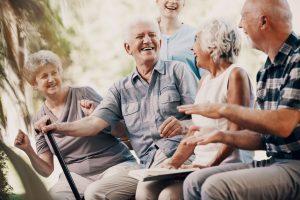
 In recognition of International Day of Friendship on July 30, this is a good time to consider how the presence or absence of vibrant social relationships affects well-being.
Amid the many challenges of aging, one aspect of seniors’ lifestyles shapes nearly every other dimension of their lives.
This essential aspect is simple: social interaction. An older adult’s involvement in social relationships and frequent face-to-face contact with others leads to better physical health, reduced rates of depression, and improved cognitive functioning late in life, according to a study at Penn State University.
Some 28% of people 65 and older are socially isolated. This can arise from life changes that are entirely natural. A retiree may miss interacting with customers or coworkers, friends may move away, or a grandparent may feel a lack of purpose after grandchildren no longer need their care. The resulting feelings of social isolation are linked to a one-third increase in the risk of cardiovascular disease and stroke and a 50% increase in the likelihood of premature death, according to a report by the National Academy of Science, Engineering, and Medicine.
Social isolation is also linked to a 50% increase in the risk of dementia. Researchers believe that participation in community activities and senior clubs activates and maintains neural networks in the brain. Adults who had more social connections performed better on tests of cognitive skills at both the beginning and end of a study of 1,189 older adults.
Older adults who feel lonely and isolated face a higher risk of depression and psychological distress. Contact via email, phone, and text is not enough to ward off emotional pain. Seniors need face-to-face contact with family and friends to help them avoid depression.
Getting involved in meaningful activities can ease feelings of loneliness and help stave off illness. Seniors who are socially active are also more motivated to engage in active leisure time pursuits, including taking a walk or doing repairs around the house, according to the Penn State study. These findings may eventually open the door to classifying certain leisure activities as “behavioral medicine.”
While seniors appreciate help from adult children with tasks and chores, they tend to turn to close friends and other relatives for emotional support. Seniors can gain this vital sense of connectedness by volunteering to work for service or charitable organizations, joining clubs, or participating in religious groups. Playing music with others, singing in a choir, and attending cultural events also have been linked in research to a longer life. For seniors battling illness, joining support groups with others dealing with the same condition can also foster meaningful interpersonal ties.
At Litherland, Kennedy and Associates, we recognize that social ties are a powerful tonic for body, mind, and spirit. Actively building new connections with others can increase the odds of a longer, healthier life. We offer numerous social, educational, and charitable events for clients each year to help them build enjoyable social ties and a sense of family among team members, clients, and their family members.
This article by Attorney Justin M. Kennedy was featured as the cover article of the Your Estate Matters newsletter, Quarter 3, 2024

- Why Every Adult Needs a Health Care Power of Attorney - May 21, 2026
- Year-End Tax Planning Strategies for 2025 (VIDEO) - November 13, 2025
- Homeowner Insurance, Title Insurance, and Your Living Trust (VIDEO) - February 17, 2025
